- English
- Español
- Português
- русский
- Français
- 日本語
- Deutsch
- tiếng Việt
- Italiano
- Nederlands
- ภาษาไทย
- Polski
- 한국어
- Svenska
- magyar
- Malay
- বাংলা ভাষার
- Dansk
- Suomi
- हिन्दी
- Pilipino
- Türkçe
- Gaeilge
- العربية
- Indonesia
- Norsk
- تمل
- český
- ελληνικά
- український
- Javanese
- فارسی
- தமிழ்
- తెలుగు
- नेपाली
- Burmese
- български
- ລາວ
- Latine
- Қазақша
- Euskal
- Azərbaycan
- Slovenský jazyk
- Македонски
- Lietuvos
- Eesti Keel
- Română
- Slovenski
- मराठी
- Srpski језик

油圧マニホールド加工はどのように産業効率を向上させますか?
Summary: Hydraulic manifolds are the backbone of fluid power systems, ensuring precise flow and pressure control. Efficient machining of these components directly impacts system reliability, performance, and longevity. This article delves into the key aspects of hydraulic manifold machining, common challenges, and solutions provided by industry experts like Difon.
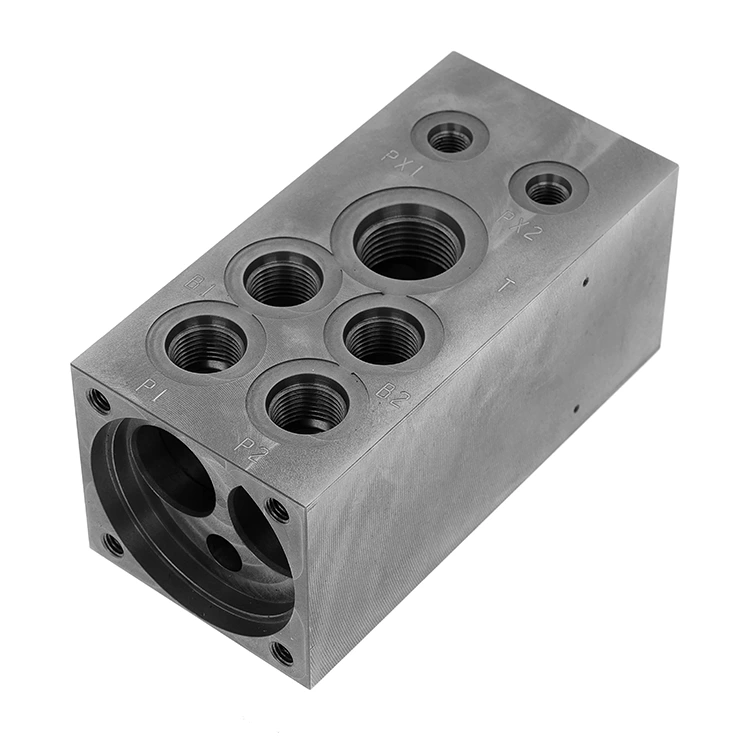
Table of Contents
- What is Hydraulic Manifold Machining?
- Key Benefits of Precision Machining
- Common Machining Challenges and Solutions
- Materials and Machining Technologies
- Quality Assurance and Testing
- FAQ
What is Hydraulic Manifold Machining?
Hydraulic manifold machining involves the precise shaping, drilling, and milling of metal blocks to create complex fluid pathways. These pathways control the direction, pressure, and flow rate of hydraulic fluid in industrial machinery. Companies like Difon specialize in advanced machining processes that ensure reliability in demanding applications.
- Function: Direct hydraulic fluid to various system components.
- Precision: Tolerances often within microns to avoid leakage.
- Applications: Construction machinery, industrial automation, aerospace, and more.
Key Benefits of Precision Machining
High-quality machining of hydraulic manifolds offers multiple advantages:
| Benefit | Description |
|---|---|
| Enhanced Efficiency | Precision channels reduce energy loss and improve system responsiveness. |
| Improved Reliability | Accurate machining minimizes leaks and prolongs component life. |
| Cost Savings | Lower maintenance costs due to fewer system failures. |
Common Machining Challenges and Solutions
Hydraulic manifold machining is complex and requires careful attention to detail. Typical challenges include:
- Tight Tolerances: Micron-level accuracy is essential. Solution: CNC milling and advanced metrology tools.
- Surface Finish: Rough surfaces can cause fluid turbulence. Solution: Precision honing and polishing techniques.
- Material Hardness: High-strength alloys are difficult to machine. Solution: Specialized cutting tools and coolant management.
Companies like Difon leverage modern machinery to address these challenges efficiently.
Materials and Machining Technologies
Hydraulic manifolds are typically made from aluminum, steel, or stainless steel. Each material requires specific machining strategies:
- Aluminum: Lightweight and easy to machine but prone to burr formation.
- Steel: Strong and durable, requires higher cutting forces.
- Stainless Steel: Corrosion-resistant but demands precise tool selection.
Modern machining technologies include:
- CNC Milling and Drilling
- EDM (Electrical Discharge Machining)
- Precision Grinding and Polishing
- Multi-axis Machining Centers
Quality Assurance and Testing
To ensure hydraulic manifolds perform under extreme conditions, rigorous testing is crucial:
- Dimensional Inspection: CMM machines verify micron-level tolerances.
- Pressure Testing: Confirms leak-free operation at rated pressures.
- Surface Analysis: Ensures smooth flow paths for hydraulic fluids.
Difon integrates these quality control measures to guarantee high-performance manifolds.
FAQ
- What industries use hydraulic manifolds?
- Construction, aerospace, automotive, energy, and industrial automation.
- How often should manifolds be inspected?
- Inspection intervals depend on usage, typically every 6–12 months for heavy-duty applications.
- Can custom manifold designs be produced?
- Yes, Difon offers fully customized machining solutions tailored to client specifications.
- What materials are best for high-pressure applications?
- Stainless steel and high-strength alloys are preferred due to durability and corrosion resistance.
For high-precision, reliable hydraulic manifold machining solutions, Difon provides advanced technology, expert knowledge, and dedicated support. Contact us today to discuss your project requirements and elevate your system performance.